You drive past Jowers Lane every time you cut through to Hagood Street. Maybe you’ve noticed the sign. Maybe you haven’t. It’s a quiet little street in the Crestline Park neighborhood, tucked west of Hagood, easy to miss if you’re not looking.
But here’s what that street name means, and I promise you, once you know this, you will never drive past it the same way again.
Jowers Lane is named for a widow. Her name was Sarah Louise Latham Jowers. And the reason she had a house on that lane — the reason the lane exists at all — is that on September 9, 1887, her husband Theophilus Calvin Jowers fell to his death into a pool of molten iron at Alice Furnace No. 1, one of the first blast furnaces ever built inside the city limits of Birmingham. He was the assistant foundryman. He was supervising a repair to a bell at the top of the furnace when he lost his footing and went in.
After Theophilus died, the owner of Alice Furnace — Henry DeBardeleben’s operation, the DeBardeleben Coal and Iron Company — built a home for Sarah and her five children on what is now Jowers Lane, west of Hagood Street. Footnote 14 in Marilyn Davis Barefield’s A History of Mountain Brook, Alabama & Incidentally of Shades Valley lays it out plainly.
A street in our neighborhood. Named for a family broken by an industrial death in 1887. And the company that killed him built the widow a house right here.
That, by itself, would be a story worth telling. But it’s not even the half of it.
The Ghost That Followed the Fire
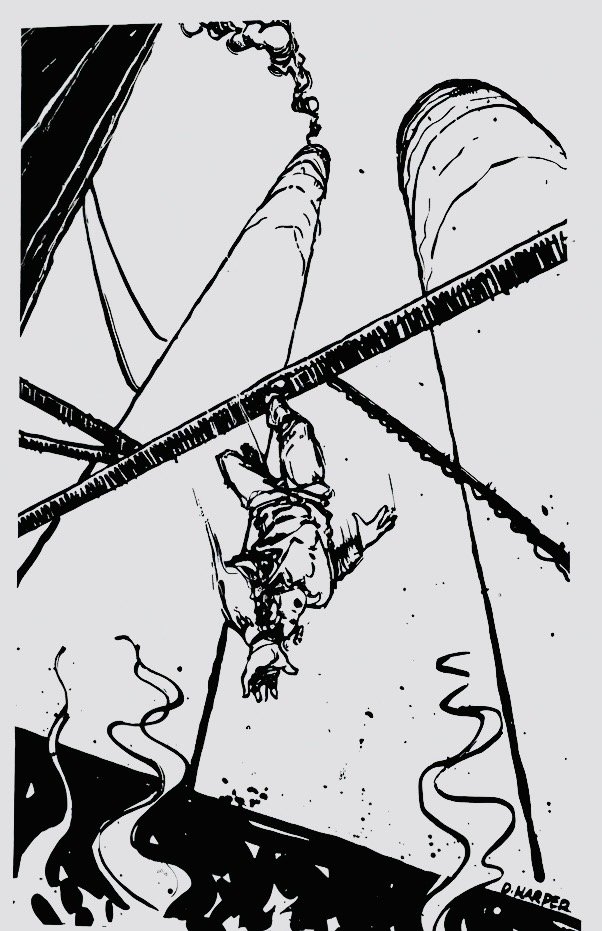
After Theophilus died, his coworkers at Alice Furnace started reporting something strange. At first it was just a feeling — a cold presence on the bridge at Little Alice, a sense that someone was standing there who shouldn’t be. Then the sightings became more specific. Workers described seeing a figure walking the hearth, moving through areas too hot for any living person, checking on the furnace the way Theophilus always had.
Nobody was afraid of him. That’s what makes this story different from most ghost tales. The men at Alice Furnace didn’t run from Theophilus Jowers. They welcomed him. He’d loved the work — loved it enough that he once told Sarah, according to family tradition, that as long as there was a furnace standing in Jefferson County, he’d be there. His coworkers took him at his word.
When Little Alice — Alice Furnace No. 1 — was torn down in 1905 after a quarter century of service, the ghost moved to Big Alice, Alice No. 2. When Big Alice shut down in 1927, the only remaining iron-making furnace in the Birmingham district was the Sloss Furnaces on First Avenue. And so the ghost of Theophilus Calvin Jowers made the move to Sloss.
That’s where Alabama’s greatest storyteller found him.
Kathryn Tucker Windham and the Story That Wouldn’t Die
Kathryn Tucker Windham was born in Selma, Alabama on June 2, 1918. She started writing movie reviews for her hometown paper at the age of twelve. She became one of the first women to cover the police beat for a major Southern daily, working for the Alabama Journal and later the Birmingham News. She was a photographer. A journalist. A commentator for NPR’s All Things Considered. She founded the Alabama Tale Tellin’ Festival in Selma in 1978, which still runs to this day. Harper Lee — yes, that Harper Lee — nominated her for induction into the Alabama Academy of Honor in 2003. She received the National Storytelling Association’s Circle of Excellence Award and Lifetime Achievement Award. She died on June 12, 2011, at the age of 93, and was inducted posthumously into the Alabama Writers Hall of Fame.
But what Kathryn Tucker Windham is most beloved for, what made her a household name across Alabama and beyond, is a book she published in 1969 with folklore teacher Margaret Gillis Figh: 13 Alabama Ghosts and Jeffrey. If you grew up anywhere in this state, you either read it or someone read it to you. It is one of the defining books of Alabama culture — warm, funny, meticulously researched, and deeply respectful of the people and places whose stories it preserves.
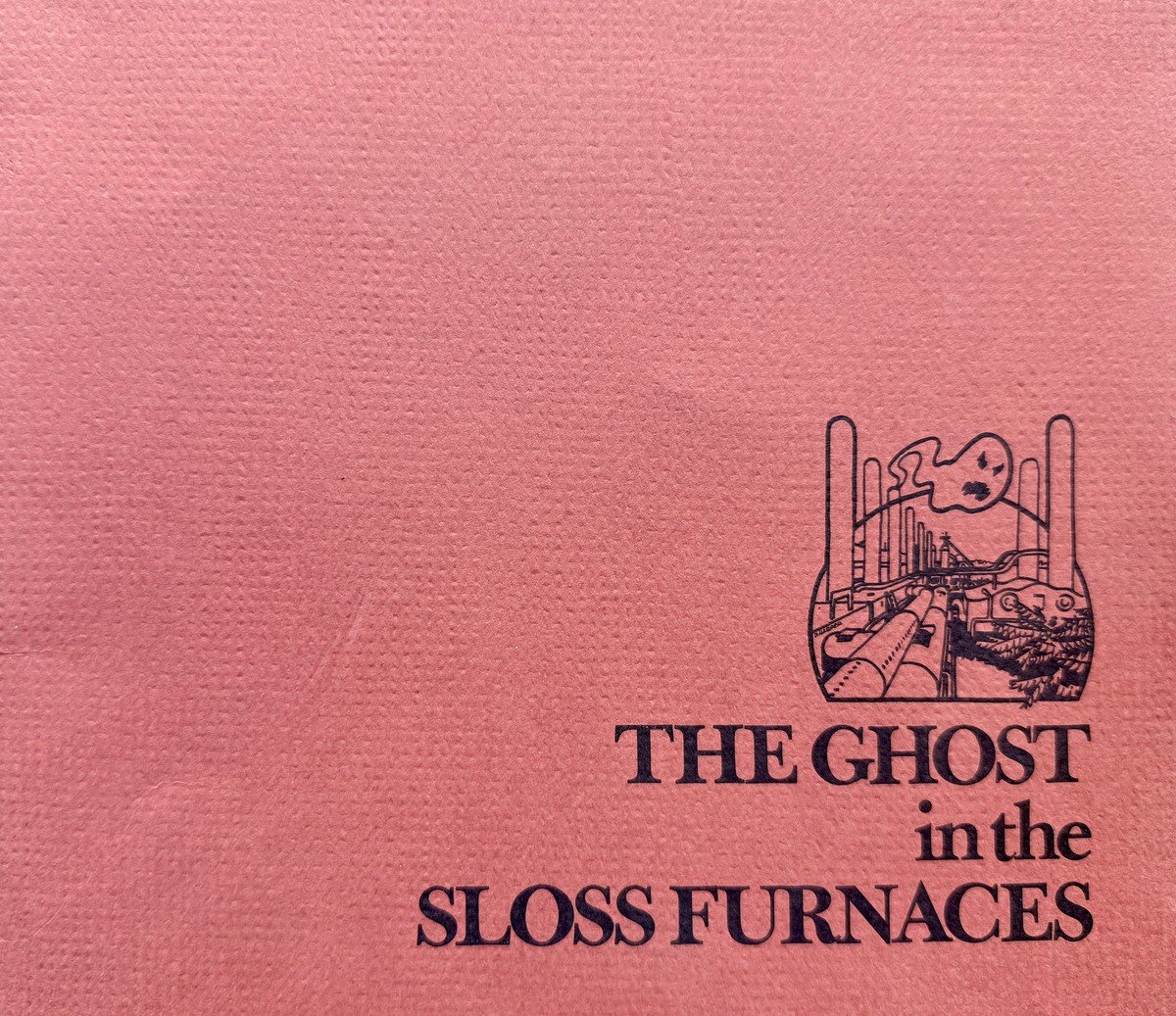
The story of Theophilus Calvin Jowers was part of that world — the world of Alabama ghost folklore that Windham spent her life collecting, preserving, and sharing. And in 1978, she gave the Jowers story its own dedicated treatment: a limited-edition pamphlet titled The Ghost in the Sloss Furnaces, published as a public service by the Birmingham Historical Society and the First National Bank of Birmingham, illustrated by Dennis Harper. It’s 24 pages of the kind of storytelling that makes you forget you’re reading — you feel like you’re sitting on someone’s porch while they tell you something they’ve been waiting years to say.
It remains one of the hardest-to-find titles in Windham’s bibliography. The Crestline Neighborhood Association now has photographs of the original 1978 limited edition, including period images of the furnaces themselves.
Where to Find the Books
The Ghost in the Sloss Furnaces by Kathryn Tucker Windham (Birmingham Historical Society, 1978) is available through the Birmingham Public Library system, occasionally through the Birmingham Historical Society, and from used book sources including AbeBooks. It goes in and out of print — when you find a copy, grab it.
13 Alabama Ghosts and Jeffrey by Kathryn Tucker Windham and Margaret Gillis Figh (originally Strode Publishers, 1969; reprinted by University of Alabama Press) is much more widely available and belongs on every Alabama bookshelf.
A History of Mountain Brook, Alabama & Incidentally of Shades Valley by Marilyn Davis Barefield is the essential reference for the documented history connecting the Jowers family, Alice Furnace, and our neighborhood.
All story rights remain with the author’s estate and the Birmingham Historical Society. Historical documentation courtesy of Marilyn Davis Barefield, A History of Mountain Brook, Alabama & Incidentally of Shades Valley.
Crestline Neighborhood Association · Local History Series